
Turmeric
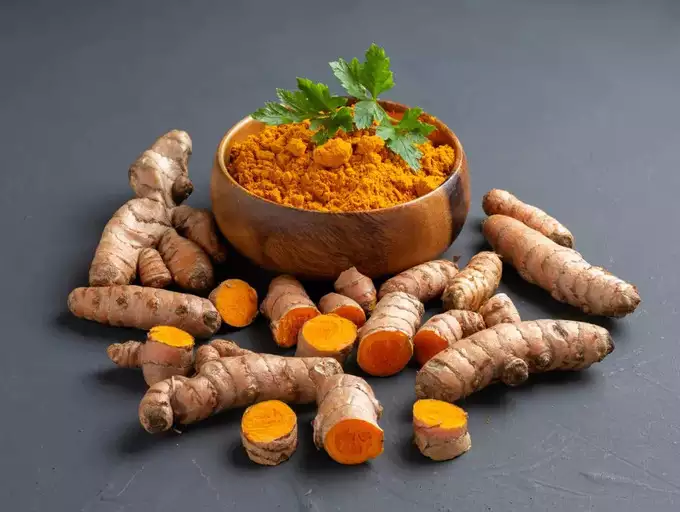
Turmeric, referred to as Haldi in Hindi, is a common flavor in Indian cooking and also a significant ingredient in the pre-wedding Hindu event known as the Haldi, or Pithi, ceremony. Known to possess anti-inflammatory, healing, beautification, antiseptic, and purification properties, Haldi is essentially a cleansing procedure for the bride and groom to be. It’s beautiful mustard yellow hue is auspicious in Indian tradition representing a life of prosperity for the couple about to begin their new life together. A common reason why Haldi is used for this ceremony is to rid the couple of Buri Nazar, the Sanskrit term for evil eye. After the ceremony is completed, the Bride and Groom are expected to stay within the household in order to prevent all evil spirits.
Elephant foot yam
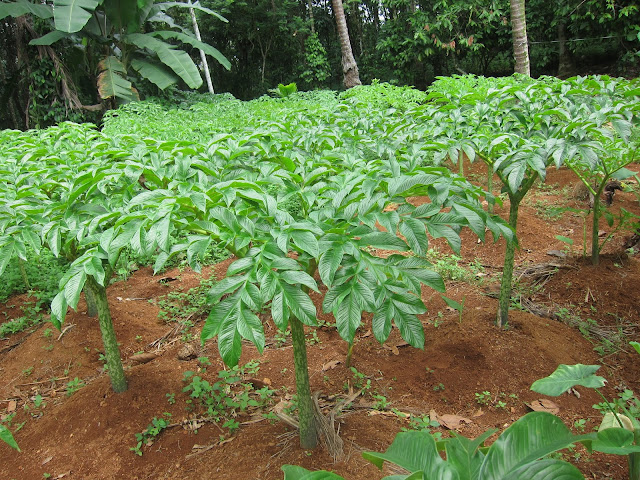
Amorphophallus paeoniifolius, the Elephant Yam, is a fantastic perennial tropical Aroid native to the Asian tropics, from India to New Guinea and Northern Australia. This is another one that has to be seen to believe. This fantastic 3 feet tall 2 feet wide flower is a must for any tropical enthusiast. This plant produces a single inflorescence followed by a solitary leaf. The plant prefers sandy and loamy moist soils. It can grow in semi-shade or no shade.
Ginger
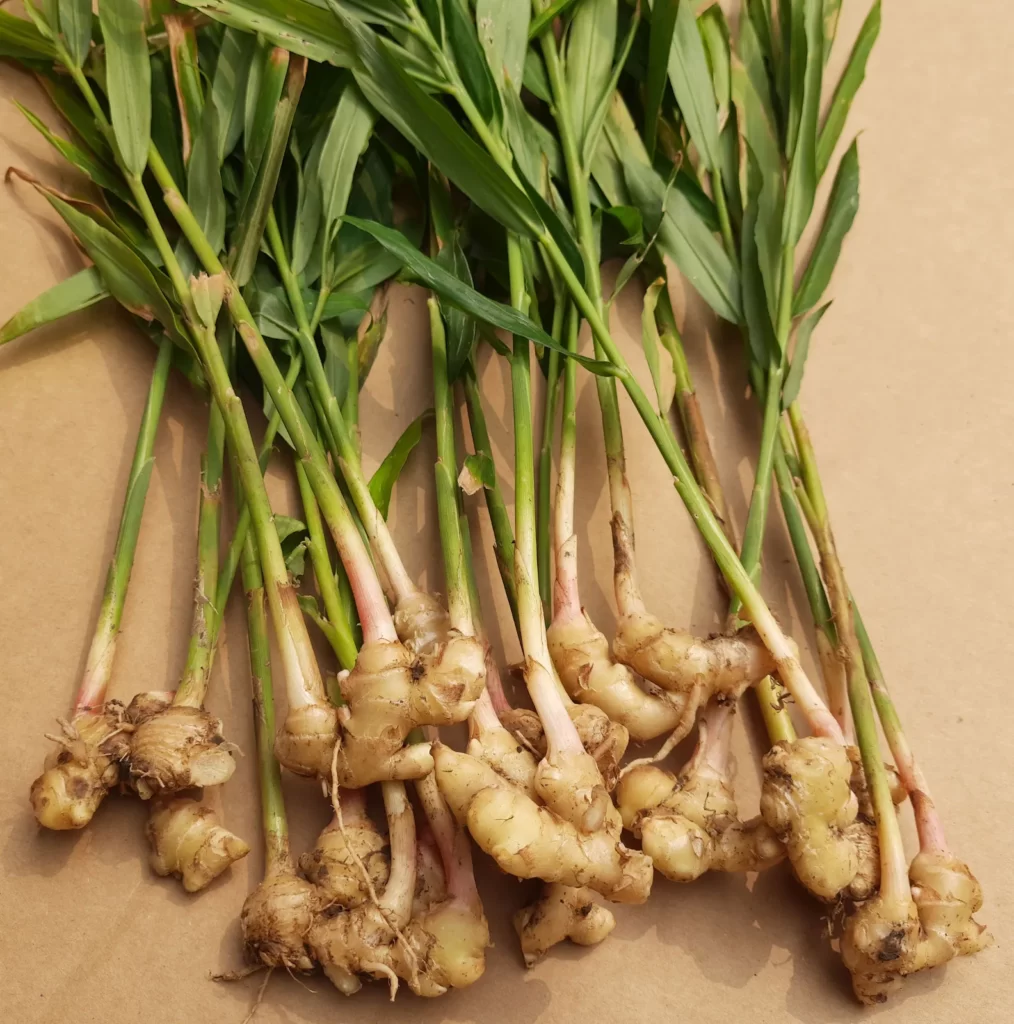
Ginger, (Zingiber officinale), herbaceous perennial plant of the family Zingiberaceae, probably native to southeastern Asia, or its pungent aromatic rhizome (underground stem) used as a spice, flavouring, food, and medicine.
Ginger is propagated by planting rootstalk cuttings and has been under this type of cultivation for so long that it no longer goes to seed. Harvesting is done simply by lifting the rhizomes from the soil, cleansing them, and drying them in the sun. The dried ginger rhizomes are irregular in shape, branched or palmate. Their colour varies from dark yellow through light brown to pale buff. Ginger may be unscraped (with all of its cork layer), partly scraped, or scraped or peeled (with all of its cork, epidermis, and hypodermis removed).
Greater yam
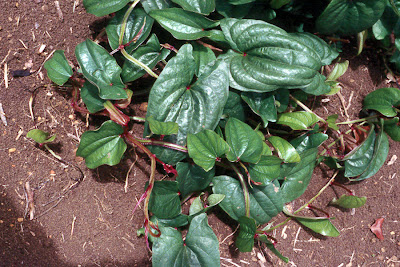
Dioscorea alata is an annual vine. The stem is square in cross section, having thin expanded tissues (wings) in green or reddish color. The leaves are heart-shaped, 3 to 6 inches long and oppositely arranged. Inflorescences are racemes, consisting of small white, greenish or yellowish flowers without petals. Some plants are hermaphroditic or dioecious (male and female flowers borne in separate inflorescences on different plants).
yam bean
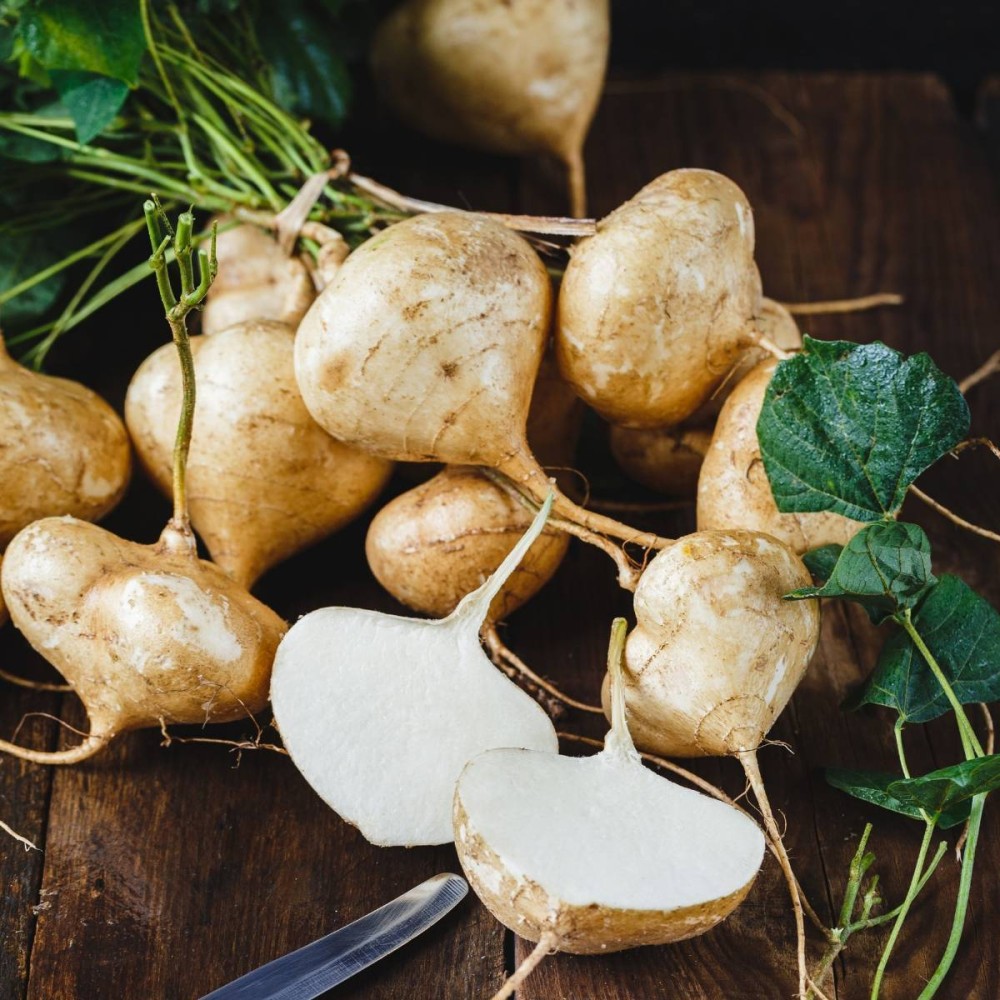
The yam bean is a legume but unlike its close relatives the soybean and other beans, the yam bean is cultivated for its large, tuberous roots. The pods are toxic when mature but can be used as a vegetable when young. The plant is a climbing vine with flat, kidney-shaped seeds, and the tubers range in weight from 0.5 to 2.5 kg. Its white/blue flowers are often removed (a process known as reproductive pruning) to increase yield and biomass of the tubers.
Taro
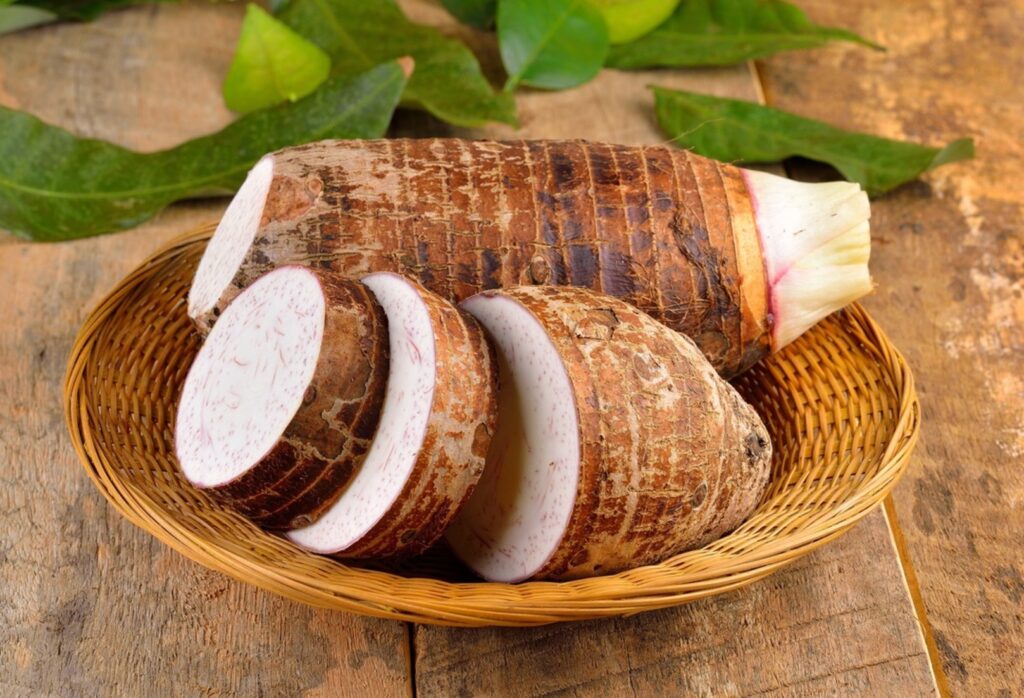
Taro, also called eddo or dasheen, is a tropical plant native to Southeast Asia that produces a starchy root vegetable with a brown outer skin and a white flesh with purple specks. Although commonly referred to as “taro root,” the vegetable is technically not a root but a corm, or underground stem.
Taro leaves and corms are toxic if eaten raw due to high levels of calcium oxalate, but can be safely eaten once cooked.